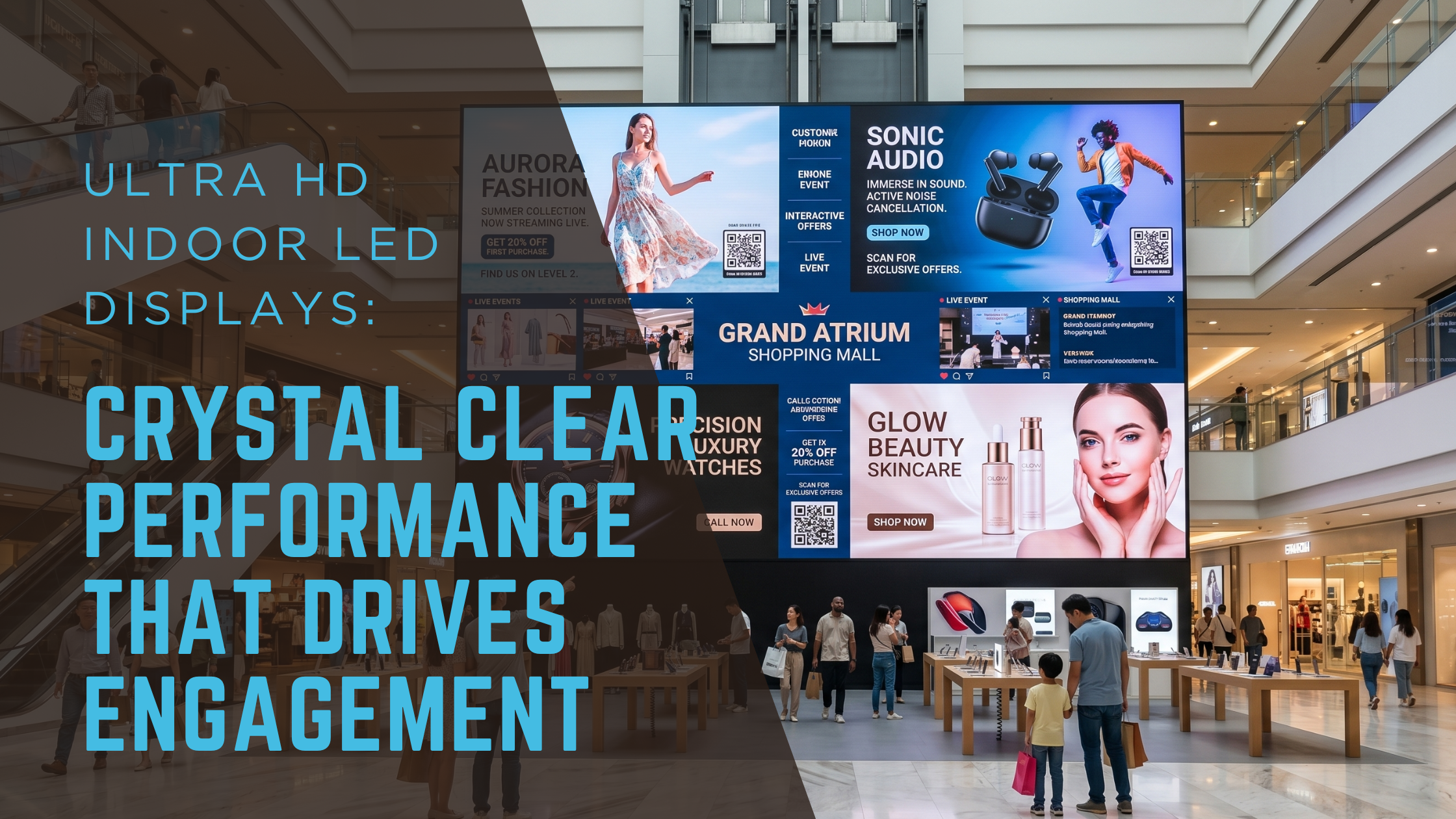
The displays aren’t just screens anymore – they are actual architectural features. Relying on an aging projector to close a massive corporate deal is a losing battle. Clients expect retina-quality visuals. If your lobby or boardroom looks dated, your entire brand feels dated.
Here is why upgrading your visual infrastructure is no longer optional.
1. The Engineering Behind an Ultra HD Indoor LED Display
We’ve completely moved past those chunky outdoor billboards. Indoor tech is basically micro-engineering at this point. It’s about precision.
-
Pixel Pitch dictates everything:
-
-
When a client stands a foot away from the glass, you can’t have visible gaps between the lights.
-
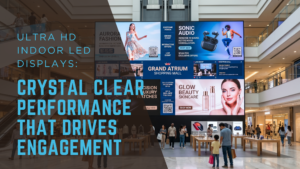
That is exactly why P0.9 to P1.5 pitch ranges are taking over. It packs millions of tiny diodes together into a tiny space.
-
The result is text and video so sharp it rivals a flagship smartphone. No pixelation. No blurry edges.
-
-
COB Tech is the new standard:
-
-
Older SMD panels broke way too easily. Someone brushes against it with a heavy coat, and a pixel instantly goes dark.
-
Chip-on-Board (COB) manufacturing seals the diodes directly under a hard, clear resin.
-
It makes the whole wall incredibly tough, totally dust-proof, and delivers crazy deep blacks.
-
2. Transforming Spaces with a Commercial Indoor LED Display
You don’t put the same screen in a boardroom that you’d put in a shopping mall. Different rooms demand totally different setups to keep people engaged.
-
Upgrading Executive Boardrooms:
-
-
CEOs look at dense spreadsheets and live data feeds all day. Fuzzy visuals kill meeting productivity.
-
Dropping an All-In-One (AIO) LED setup into a boardroom gives you massive, unbroken space.
-
There are no projector fans whirring. No waiting for bulbs to warm up. Just instant, blindingly clear data.
-
-
Dominating Luxury Retail:
-
-
Foot traffic is brutal right now. You need a massive hook to make people stop walking and actually look.
-
Running 4K macro-shots of a product on a giant wall physically grabs attention from the sidewalk.
-
It pulls shoppers inside and keeps them in the store longer. It really is that simple.
-
3. The Technical Edge of a High Resolution LED Display
Pixel count is mostly just a marketing number. Real performance happens when the cameras start rolling or the room lights go down.
-
Beating the Smartphone Camera:
-
-
During a big corporate product launch, half the audience immediately pulls out their phones to film the stage.
-
You absolutely need a 3840Hz refresh rate. If you go cheaper, the screen will flicker on camera.
-
Those ugly black scan lines will ruin your event’s social media impact and make the gear look cheap.
-
-
Dark Room Color Accuracy:
-
-
Nobody runs indoor screens at maximum brightness. It literally hurts your eyes. You usually dial it down to maybe 20 percent.
-
The tricky part is keeping the colors accurate when the screen is that dim.
-
Good processors keep the colors rich and the shadows deep, even when the room is pitch black.
-
4. Designing with an Indoor LED Video Wall
Stop treating screens like flat TVs. Modern panels are essentially digital building blocks. You can put them anywhere.
-
Killing the Grid:
-
-
Old LCD video walls look terrible because thick black bezels split the image right down the middle.
-
Modern LED tiles lock together edge-to-edge.
-
You get a completely seamless canvas. No lines ruining the presenter’s face or chopping up your logo.
-
-
Creative Architectural Installations:
-
-
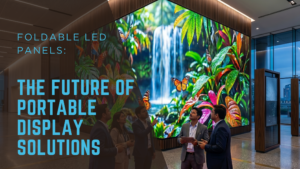
You can physically bend these modules. You aren’t stuck with flat rectangles.
-
Installers can wrap them around giant concrete pillars or build perfect 90-degree outer corners.
-
It turns boring, dead architecture into a massive digital asset for the brand.
-
5. Eco-Friendly and Smart Operation
A giant screen shouldn’t double as a room heater. The new gear runs cool, pulls way less power, and doesn’t require an IT degree to operate.
-
Common Cathode Efficiency:
-
-
Old tech blasted the exact same voltage to every color. That wasted ridiculous amounts of power as heat.
-
Sending precise voltage to the red, green, and blue diodes cuts power draw by almost 30 percent.
-
The screen stays cool to the touch. It lasts longer. And it significantly cuts down the building’s electric bill.
-
-
Automated Cloud Management:
-
-
You shouldn’t have to walk around with a USB stick to update a promo video.
-
Everything runs on secure cloud software now.
-
You push a button on your laptop, and the content updates instantly across the entire building.
-
Summary
If you want to own the room, you have to bring flawless visuals. Ditch the faded projectors. Lock in fine-pitch technology, build it directly into your architecture, and give your audience a reason to actually look up.