Let’s just be honest for a second. Pinning a piece of paper to a cork board outside city hall or hoping drivers notice a faded metal road sign is a recipe for disaster in a modern city. If authorities want to keep millions of people safe, aware, and actually moving through the streets without total gridlock, the old infrastructure simply has to go. Transitioning to a live, digital canvas isn’t just a nice upgrade anymore; it’s basically the bare minimum for running a municipality today.
Here is a breakdown of exactly how modern governments deploy massive LED screens to overhaul the way they talk to the public.
The Core of a public information display system
When a serious crisis hits or a major civic update needs to get out, officials simply cannot wait for tomorrow’s newspaper. They have to talk to the street right then and there.
-
Instant Emergency Broadcasting
-
-
Weather and Disaster Alerts: Authorities can blast instant visual warnings for flash floods, brutal heatwaves, or incoming storms straight to every single screen in a specific zip code simultaneously.
-
Law Enforcement Integration: Local police can immediately flash Amber alerts or fugitive details up on massive digital boards, effectively turning thousands of people on their morning commute into an extra set of eyes.
-
-
Streamlining Civic Administration
-
-
Public Health Campaigns: Governments can ditch boring flyers and instead run high-def, full-motion video ads for vaccine drives or neighborhood cleanups right in the middle of busy town squares where people actually look.
-
E-Governance Portals: Throw a giant, scannable QR code up on a screen. Suddenly, folks can pay their property taxes or renew a dog license right from their phones while they are standing around waiting for the bus.
-
Transforming Urban Centers with smart city LED solutions
The whole idea behind a smart city isn’t just to hide servers in a basement and silently collect data. The real value is taking that live data and pushing it right out onto the street so the public can actually use it.
-
Live Environmental Dashboards
-
-
Pollution and AQI Tracking: Modern smart city LED solutions wire directly into city air sensors to flash real-time Air Quality Index (AQI) numbers. This lets people know exactly what kind of air they are breathing on their walk to work.
-
Temperature and UV Warnings: When the brutal summer sun hits dangerous levels, these screens automatically switch gears to display safety warnings, helping protect construction crews and outdoor workers from severe heatstroke.
-
-
Mass Transit Integration
-
-
Live Commuter Updates: Dropping bright screens with tight pixel pitches at bus hubs and train stations to show live, GPS-tracked arrival times instantly calms down frustrated commuters.
-
Crowd Management during Festivals: When huge political rallies, parades, or religious festivals take over downtown, police use these boards as dynamic maps. They steer massive crowds away from dangerous bottlenecks and keep foot traffic moving safely.
-
Optimizing Flow with traffic management display screens
Gridlocked streets cost the local economy billions in wasted time every single year. Digital screens actually give traffic cops the real-time power to physically reroute cars minute-by-minute.
-
Real-Time Highway Routing
-
-
Accident Diversions: If a nasty pile-up completely shuts down the left lane, traffic management display screens instantly warn drivers five miles back. This gives them plenty of time to take an early exit instead of getting trapped in a massive parking lot.
-
Dynamic Speed Limits: Forget about permanent metal speed signs. Authorities can instantly drop the legal speed limit on a digital board the second a massive monsoon downpour or thick fog rolls in, stopping huge crashes before they happen.
-
-
Toll and Parking Efficiency
-
-
Live Parking Data: We can finally stop cars from driving in circles for an hour. Cities flash exactly how many parking spots are currently open in the municipal lots right on the main road.
-
Automated Toll Updates: Put digital boards a mile ahead of the toll booths to warn drivers about closed fast-tag lanes or new toll rates. It completely kills those annoying bottlenecks at the payment gates.
-
The Hardware and Security of government digital signage
You definitely can’t just buy a cheap TV from an electronics store, bolt it to an overpass, and expect it to survive. Civic hardware has to be basically bulletproof, blindingly bright, and completely locked down from hackers.
-
Military-Grade Security
-
-
Encrypted CMS Platforms: A piece of government digital signage runs on totally closed, highly secure software. Some random hacker in their basement can’t just hijack a highway board to pull a prank or cause public panic.
-
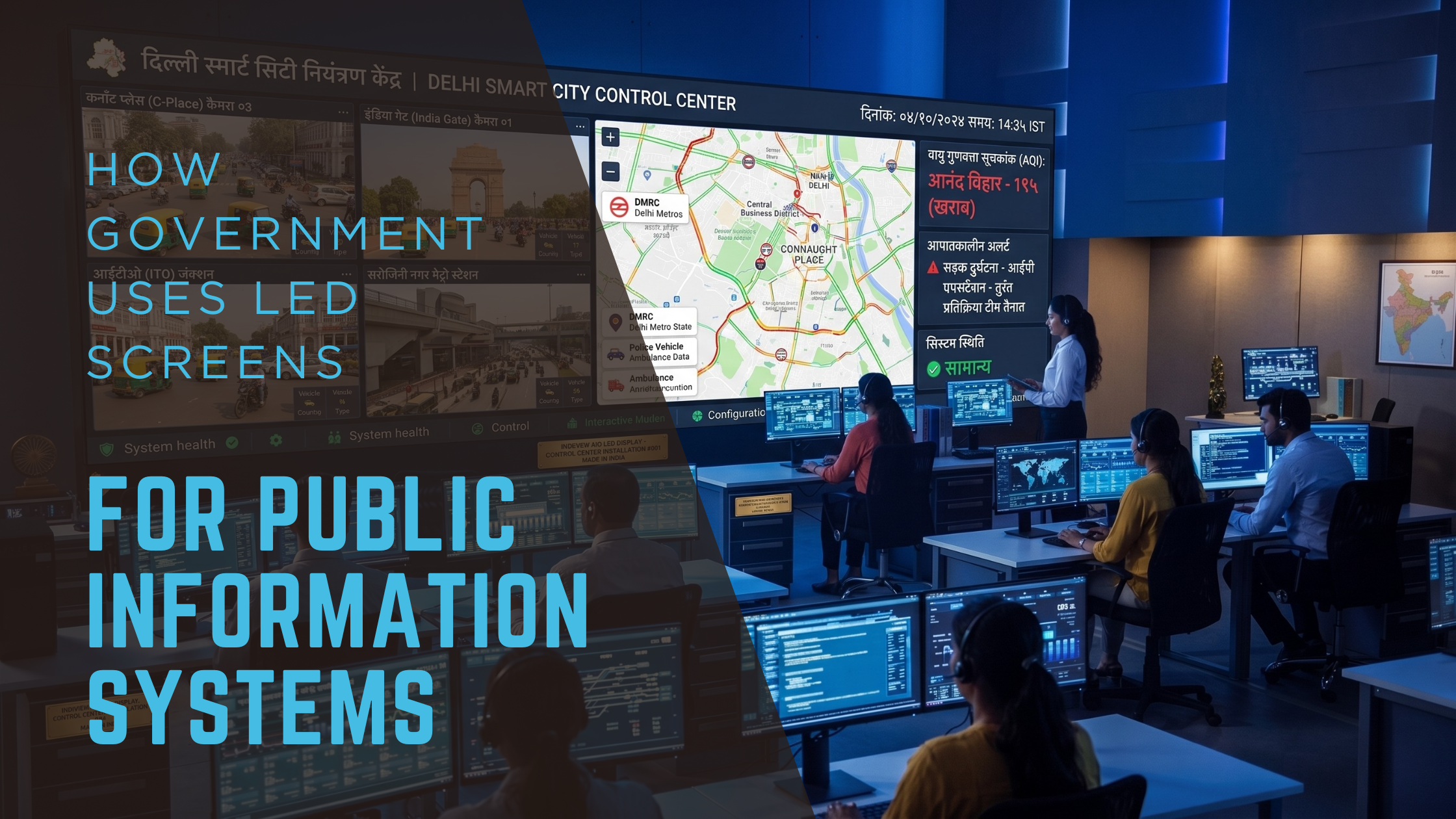
Remote Monitoring: City IT departments can sit in one secure room and monitor the temperature, pixel health, and internet connection of hundreds of screens across the state on one single dashboard.
-
-
Surviving the Brutal Elements
-
-
IP-Rated Weatherproofing: These outdoor cabinets are sealed incredibly tight, usually boasting IP65 or IP68 ratings. They take a beating from heavy monsoon rains, 45°C summer heat, and nasty dust storms without a single short-circuit.
-
Anti-Glare and High Nits: Government screens pump out crazy brightness—often between 7000 and 10,000 nits. This guarantees that crucial traffic warnings punch right through the blinding glare of the afternoon sun.
-
-
Unbreakable Redundancy
-
-
Failsafe Power: Civic screens are built with dual power and data backups. If the city’s power grid fluctuates or drops completely, the critical emergency messaging stays perfectly lit for the public to see.
-
Conclusion
Upgrading to a digital-first communication network is no longer some futuristic vanity project. It is the absolute bare minimum requirement for running a safe, efficient city today.
-
Ditch the static metal: Stop wasting money on printed papers and rusty metal signs that are completely useless when a live emergency is actively unfolding.
-
Protect the public: Fire off instant, highly visible alerts to keep your citizens totally clear of danger zones during crazy weather or sudden civic crises.
-
Build for the future: Spend the tax budget on secure, heavily weatherproofed digital infrastructure that is guaranteed to run 24/7 without failing.
Moving to a dynamic LED network gives municipalities the ultimate tool to manage street chaos, fix awful traffic, and talk directly to their citizens exactly when it matters most.